
Not a sane time...
Updated: Apr 21
“When I was young all the world seemed that life was so wonderful,
A miracle, oh, it was beautiful, magical…”The Logical Song Supertramp
Perplexingly, paradoxically that is how the world must have seemed to most when Artemis II recently sent images of our planet taken on its manned mission to the moon. Having gone further than any previous missions, the crew ‘s enlightening images taken from the dark side of the moon transfixed their earthbound audience. The unique and fragile creation of Earth, was visible for all to see.

Yet, here on earth itself our days have been darkened by the ongoing conflict in the Middle-East with its talk of obliteration and the end of civilizations.
If you will forgive me, I think that politics and tennis once again can provide links and explanations to our troubled days. In 1973, the Men’s tournament at Wimbledon was affected by a strike by the men’s professional association in support of the long-forgotten Niki Pillic of Yugoslavia. In the absence of the world’s best male players the title was won by Czechoslovakia’s Jan Kodes who defeated Soviet player, Alex Metrevelli, in straight sets. The second set was the first decided by a tie-break in Wimbledon history, being played at eight games all.
Yugoslavia, Czechoslovakia and the Soviet Union are now history references, but one thing that has not changed since 1973 is the importance of oil to the world.
Indeed, 1973 was the year when the world was put on notice about its singular significance.
When the OPEC cartel quadrupled the price of oil, the industrialised economies of the world reeled and had to manage the new phenomenon of stagflation which saw simultaneously high inflation and unemployment bedevil policy makers.

Australia was not spared the consequences of the OPEC shock. It especially interfered with the newly elected Labor government’s large programme of increased social expenditure. As a schoolboy, however, I was reminded that Australia was relatively lucky.
After all, we did not have to rely on Arab states for our petrol supplies as we had our own oil rigs in Bass Strait and many domestic refineries.
The war in Iran has emphatically reminded everyone that what could once be taken for granted is no longer neither logical, nor predictable. For Australians, this has been dramatically displayed by major fire damage to one of its two major refineries at Corio in Victoria. Never previously beset by fire, the refinery self-immolated at a time of a national fuel shortage- the Gods do play with us for sport!

Meanwhile, Australia’s Prime Minister has had to embark on a self-sufficiency campaign to secure domestic fuel supplies from nearby neighbours, including Singapore and Brunei. Beg from thy neighbours, indeed!
The luck and the oil have both run dry in Australia.
It is difficult to write commentary on the war in Iran as its events and portents seem to change hourly.
Is there anything that is certain because of the conflict? Well, perhaps:
- The Strait of Hormuz has become the world’s best-known passage of water;

- The war has infected global and domestic politics to an extent that may not have been considered possible- will NATO survive this conflict in its present form?- will the conflict refocus domestic political debates on the efficacy of rushing towards energy dependency on renewable resources?
- The concept of separation of Church and State has been given an explosive renaissance by the unprecedented social media spat between the American President and an American Pope.
- The conflict may have created an ongoing imbroglio which will neither effect America’s goal of Iranian regime change, nor achieve greater stability in the Middle-East.
Stalin is said to have quipped when advised of the Pope’s disapproval of his military plans, “How many divisions does the Pope have?” Trump’s claims that the Pope (let’s not forget Trump would see Leo as forever being contaminated having been born in the Democrat citadel of Chicago) has been hypocritical in his attacks on American aggression whilst ignoring the Iranian regime’s killing of thousands of its protesting citizens was met with gales of outrage and condemnation. Righteous rhetoric was bandied about like confetti between the Oval Office and the Holy See. Trump’s bizarre personification of himself as a healing deity will be one of the lasting images of his presidency.

In Australia, another contentious battle about virtue and honour is taking place. As the Vietnam War approached its denouement in 1973 the world was shocked by allegations of war crimes by an American soldier, Lieutenant William Calley, who was convicted of the murder of 22 unarmed South Vietnamese civilians in the township of My Lai in 1968.
In Australia schoolchildren learn of the pre-eminence of the award of the highest Commonwealth award for military valour, the Victoria Cross. Australian soldier, Ben Roberts-Smith was awarded the Victoria Cross in 2011 for his role in conquering enemy fire and saving his fellow troops in the Afghan conflict in 2006. His much-heralded valour became the subject of Calley like allegations of dishonour when it was alleged that he was directly and indirectly involved in the execution of five unarmed Afghan citizens.

These allegations led to Roberts-Smith suing media organisations for defamation. He was unsuccessful at the trial and on appeal, with judges finding that on the civil standard of proof, he was more likely than not to have participated in these unlawful killings.
Now, Australia’s most highly decorated contemporary soldier has been indicted on five criminal counts of murder. His criminal trial, where his fate will be decided by a jury on the criminal standard of beyond a reasonable doubt, will not be held until 2029. Roberts- Smith has been recently released on bail after a week’s detention. His trial will be a scouring examination the moralities of war.
It will also be politically divisive. Fault lines are already being drawn between those who see him as a gallant man martyred for his bravery by a politically correct ‘lounge room warrior class’ and those who believe that even in the moral abyss of war, important principles of wartime engagement cannot be abandoned. Within this conflict, there will be equally important questions about whether our criminal justice system can deliver a fair trial, an objective jury and uphold Roberts-Smith’s presumption of innocence.
Roberts-Smith’s travails remind us of the cruel fate that often accompanies the deeds of those proclaimed as heroes.
As the world, understandably, focusses on the conflict in Iran, elections in democracies, have seen peaceful changings of the guard. In Hungary the sixteen-year rule of Trump ally, Viktor Orban came to a resounding end, defeated by Peter Magyar’s Tisza party, which has been elected on a bold programme of reform, focusing on reversing much of Orban’s domestic and foreign policies. Arguably, there is not a finer parliament building in which to exercise power than that in Budapest.
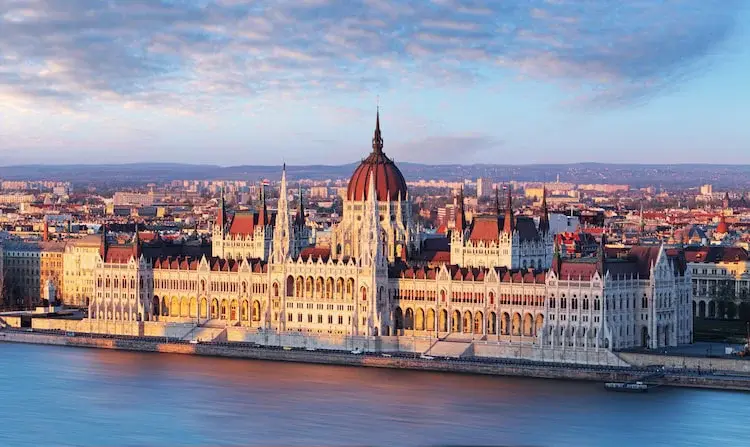
Orban’s ousting was given support by progressives around the world, including Canada’s former Prime Minister, Justin Trudeau who tweeted his delight whilst eating noodles on the ground at America’s Coachella music festival, alongside the 54 year old’s new love interest, Katy Perry. Just when you thought Prince Harry and Meghan had monopolised ways to behave crassly and entirely without dignity, Trudeau and Perry seem to have scaled new heights of unedifying behaviour.

In Canada, the result of three by-elections, all being won by the country’s governing Liberal Party, has transformed Prime Minister Mark Carney’s government from minority status to the comforts and increased authority of a majority government.
These electoral outcomes will not be viewed favourably by President Trump, but, increasingly, he is a President inspired by the amount of enmity and enemies he can create.
England’s Prime Minister, Sir Keir Starmer, has being dismissed by Trump as a “useless ally”. He continues to face pressure to resign over the appointment of Jeffrey Epstein’s associate, Peter Mandelson, as the United Kingdom’s ambassador to Washington. In order to gain some kudos, he crossed the English Channel to co-ordinate an on-line World Leaders’ summit with France’s President Macron.
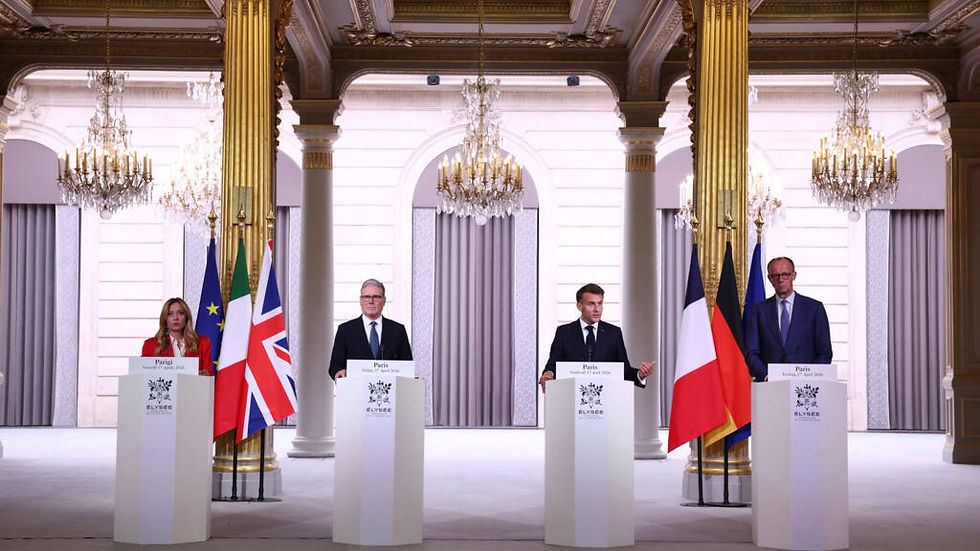
Starmer would do well to remember that when Margaret Thatcher crossed the channel in November, 1990 to attend a Leaders’ summit to ratify the end of the Cold War, her support within her Conservative Party ebbed away. Within days of returning to London, her days in office were over.
And, yes, amidst all this mayhem tennis tournaments continue to be played. Jannik Sinner has changed the top of the guard in the Men’s game . His victory over Alcaraz in the recent Monte-Carlo Masters and Alcaraz’s withdrawal from the Barcelona tournament has seen Sinner regain the world’s No.1 ranking.
The alliterative pairing of Sinner and Sabalenka are clearly primus inter pares in the world of tennis. They deserve to be. Their efforts and talents have logically placed them there.
As for other matters around the world, there seems to be little that is logical. The beauty of our world only seems to be appreciated from a world away. On Earth itself, the view seems far from majestic.


Comments